
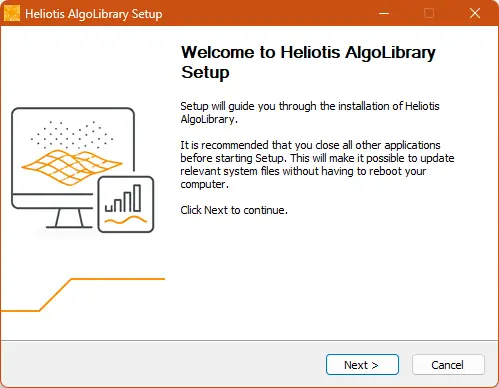
Heliotis has released a new version of the heliAlgo library. Release 1.7 expands support for current Python versions, improves numerous functions for optical system testing and calibration, and provides comprehensively revised documentation.
Specialized Algorithms for Machine Vision and Metrology
With heliAlgo, Heliotis provides a collection of specialized algorithms for image processing and optical metrology. The library complements established software libraries such as OpenCV or NumPy with methods that are often missing from conventional computer vision packages or require considerable effort to implement.
The focus is on practical procedures for characterizing, calibrating, and correcting optical systems. These include, for example, determining the modulation transfer function (MTF), correcting geometric distortion, and precisely combining multiple images (image stitching).
heliAlgo enables developers to integrate these functions directly into their own applications without having to implement the underlying algorithms themselves.
Extended Python Support
The new version supports Python 3.10 through 3.15, enabling seamless integration into current Python-based development environments. Python 3.10 also remains supported for the time being, even though this version has reached its regular end-of-life.
Improvements to SystemChecks and Calibration
A key focus of the release is the further enhancement of the SystemChecks and Calibration function groups.
The algorithms for MTF calculation, geometric calibration, distortion correction, and image stitching have been revised and improved. These functions assist developers in quantitatively evaluating optical systems and precisely processing image data.
Due to these adjustments, individual numerical results—particularly in MTF and distortion calculations—may differ slightly from previous versions. Users running automated tests with fixed reference values should review them if necessary.
Important compatibility note: The function for correcting geometrically distorted point coordinates now additionally requires the image dimensions as an input parameter. Existing applications using this function must be adapted accordingly. Further details are provided in the updated documentation.
Comprehensively Revised Documentation
With Release 1.7, the documentation has been significantly expanded and standardized.
A new, comprehensive PDF documentation is available directly in the installation directory. In addition, a common entry point for the HTML documentation is provided there.
The new introductory chapter “Using the AlgoLibrary” makes it easier to get started and outlines the basic use of the library. This allows both new and experienced users to quickly access the available functions and integrate them into their own software projects.
Continuous Development
With heliAlgo, Heliotis aims to make proven algorithms from industrial machine vision and optical metrology accessible in an easy-to-use library.
Release 1.7 continues this development with improved compatibility, refined algorithms, and significantly more comprehensive documentation.
 Heliotis AG