
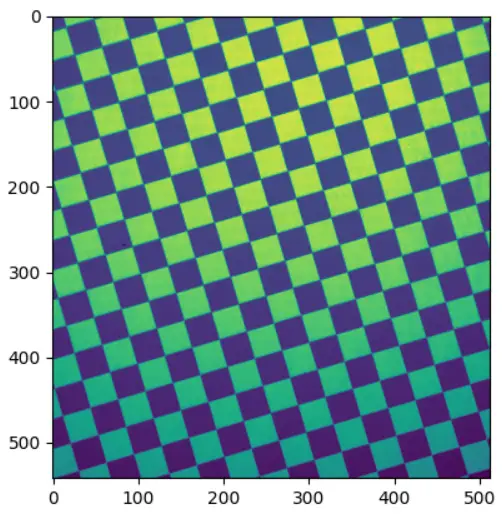
With the current release 1.6.0, the Heliotis AlgoLibrary (“heliAlgos”) has been further expanded and enhanced technically.
The library provides core algorithms for evaluation, calibration, and quality analysis of interferometric 3D measurement data and can be integrated directly into existing applications. Many of these functions are also used internally in our reference and production tools and are available to users as stable, tested building blocks.
Since heliAlgos have often been underestimated or used only sparingly to date, we would like to use the new release as an opportunity to briefly introduce the library and summarize the most important new features.
What are heliAlgos?
The AlgoLibrary extends the heliInspect SDK with ready-to-use 3D processing algorithms that cover more complex tasks specific to Heliotis devices. Many methods go beyond conventional algorithms from various vision frameworks in that they incorporate knowledge of Heliotis-specific data.
Instead of developing your own basic algorithms, you can use existing implementations directly, e.g. for:
- Focus and system analysis
- Phase processing and phase unwrapping
- ISO-compliant roughness and surface parameters
- Data cleaning
- Calibration and stitching
Integration is performed directly at code level. Wrappers are available for:
- C / C++
- CLR (C#, LabVIEW)
- Python
- Rust (new)
- Halcon
- AuroraVision
This allows the algorithms to be integrated directly into existing pipelines.
New in version 1.6.0
The current release brings several technical improvements, especially for integration and robustness.
Rust bindings
Native Rust bindings are now available.
This allows the AlgoLibrary to be integrated directly into modern, memory-safe Rust applications—without additional C/FFI wrappers.
This makes it easier to use, especially in:
- high-performance backend services
- embedded/edge applications
- new vision stacks with Rust
Extended Python support
Python is now officially supported from version 3.8 to 3.14.
Revised Halcon interface
The Halcon interface has been adapted to common HALCON conventions.
Optional parameters are now set via:
- GenParamName
- GenParamValue
set.
This ensures:
- more consistent operator signatures
- better readability
- easier extensibility
Improvements to stitching
The stitching module has been expanded based on user feedback.
New additions include, among others:
- minimum amplitude criteria
- minimum number of valid pixels
These additional quality metrics increase robustness for:
- weak signals
- edge regions
- heterogeneous surfaces
Especially for large areas or mosaic-like scans, this results in more stable stitching results.
Experimental: Improved envelope surface extraction
A new mode for envelope surface extraction has been introduced in the “Experimental” group.
Objectives:
- higher accuracy
- better robustness
- more stable surface reconstruction
This mode is particularly suitable in combination with phase-based and vibration-correcting methods to achieve a more precise and consistent 3D reconstruction.
Core technical functions of the heliAlgo library
In addition to the new features, the library continues to include proven functions for typical 3D evaluations.
System analysis & focus determination
- MTF calculation on amplitude images
- automatic determination of the optimal focal plane
- regional MTF analysis to detect misalignment in the optical system
Suitable for system checks, alignment, and inline monitoring.
Phase unwrapping with amplitude support
- Quality-guided path unwrapping
- combined use of phase and amplitude information
- more robust results at steps and material transitions
Enables stable reconstructions even with challenging topographies.
ISO-compliant roughness and surface parameters
Implementations according to:
- ISO 16610 (filter)
- ISO 21920 (profile)
- ISO 25178 (areal)
Direct calculation of roughness and texture parameters without additional software.
Data preparation & calibration
- Outlier removal
- Polynomial form removal
- Surface normal correction
- lateral distortion correction
- Stitching
- I/Q offset correction
These functions reduce systematic errors and increase reproducibility.
Conclusion
With version 1.6.0, the Heliotis AlgoLibrary is further improved both functionally and in terms of integration.
For developers, this means:
- fewer in-house implementations
- faster integration
- robust, tested algorithms
- production-consistent performance metrics
- direct use in C++, C#, Python, Rust, or Halcon
If you have not yet used heliAlgos, it is worth taking a look at the current release—many typical evaluation steps can be simplified immediately or replaced entirely.
 Heliotis AG